


Cusco vs Sacred Valley: Where to Stay Before Machu Picchu in 2026
Planning a trip to Peru and wondering whether to stay in Cusco or the Sacred Valley before visiting Machu Picchu? Both destinations offer remarkable Inca history, beautiful Andean landscapes, traditional villages, and convenient access to some of Peru’s most famous archaeological sites. However, they offer different experiences, altitudes, accommodation options, and transportation advantages.
Should you stay in Cusco or the Sacred Valley before Machu Picchu? Cusco is ideal for travelers who want to explore the historic city, visit museums, enjoy restaurants, and experience local culture. The Sacred Valley is a convenient option for travelers seeking a quieter atmosphere, scenic mountain views, and accommodation at a lower altitude than Cusco in many locations.
Your best choice depends on your arrival time, altitude tolerance, Machu Picchu train departure, travel budget, and the attractions you want to visit.
In this 2027 travel guide, Chacras Travel Peru compares Cusco and the Sacred Valley to help you choose where to stay, plan your itinerary, and arrange private transportation before your Machu Picchu adventure.
Photos Cusco Vs Sacred Valley
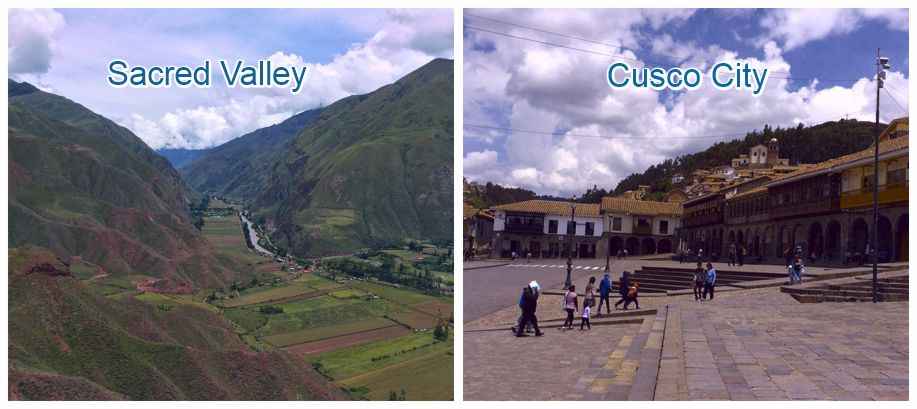
Cusco vs Sacred Valley: What Is the Difference?
Cusco and the Sacred Valley are closely connected but offer different travel experiences.
Cusco is a historic Andean city known for its Inca foundations, Spanish colonial architecture, lively markets, museums, restaurants, and archaeological sites. The Sacred Valley is a broader region northwest of Cusco, known for agricultural terraces, traditional communities, archaeological complexes, and mountain scenery.
The main difference is that Cusco offers a city-based cultural experience, while the Sacred Valley provides a more rural setting with several important Inca sites spread across different towns.
Quick Comparison: Cusco vs the Sacred Valley
| Feature | Cusco | Sacred Valley |
|---|---|---|
| General atmosphere | Historic city with busy streets | Scenic towns and countryside |
| Approximate altitude | 3,399 m (11,152 ft) | Varies by town; many popular stops are lower |
| Best for | Museums, city tours, restaurants, nightlife | Archaeological sites, mountain scenery, quieter stays |
| Accommodation | Hostels, boutique hotels, luxury hotels | Guesthouses, countryside lodges, luxury hotels |
| Main attractions | Historic center, Qorikancha, Sacsayhuamán | Pisac, Moray, Maras, Ollantaytambo, Chinchero |
| Machu Picchu access | Usually requires travel to a train station or other departure point | Ollantaytambo provides a major train connection |
| Airport arrival | Direct access from Cusco Airport | Requires additional road transportation |
| Altitude adjustment | Higher-altitude arrival and overnight stay | Lower altitude in many locations, depending on the town |
Travel tip: You do not necessarily have to choose one destination for your entire stay. Many travelers visit both Cusco and the Sacred Valley before or after Machu Picchu.
Why Stay in Cusco, Peru?
Cusco was the historic capital of the Inca Empire and remains one of the most important cultural destinations in Peru. Its historic center combines Inca stonework, colonial churches, traditional neighborhoods, museums, and lively public squares.
Staying in Cusco is a good option if you want to explore the city on foot, enjoy a wide range of restaurants, shop at local markets, and join guided archaeological or cultural tours.
Best Things to Do in Cusco
1. Explore the Historic Center and Plaza de Armas
Cusco’s main square is surrounded by historic buildings, restaurants, cafés, and churches. It is a convenient starting point for exploring the city’s history and architecture.
2. Visit Qorikancha, the Temple of the Sun
Qorikancha was one of the most important religious centers of the Inca Empire. Its surviving Inca stonework and the colonial Convent of Santo Domingo illustrate the different historical periods that shaped Cusco.
3. Discover Sacsayhuamán
Located above Cusco, Sacsayhuamán is famous for its enormous stone walls, impressive masonry, and panoramic views of the city.
4. Visit Tambomachay and Other Inca Sites
Tambomachay is associated with water and ceremonial architecture. It can be included in a Cusco archaeological tour alongside Q’enqo, Puka Pukara, and Sacsayhuamán.
5. Enjoy Local Markets and Andean Cuisine
Cusco offers opportunities to discover Peruvian food, traditional crafts, regional ingredients, and local markets.
Pros of Staying in Cusco
- Wide selection of hotels and accommodation.
- Restaurants, cafés, museums, and nightlife.
- Convenient access to the historic center and city tours.
- Cultural attractions within walking distance in central areas.
- A practical base for travelers spending several days exploring Cusco.
Cons of Staying in Cusco
- Its altitude is approximately 3,399 meters (11,152 feet).
- Traffic can make road transfers slower during busy periods.
- The historic center can be crowded during popular travel seasons.
- Some visitors experience symptoms of altitude sickness.
Why Stay in the Sacred Valley Before Machu Picchu?
The Sacred Valley of the Incas is known for its dramatic mountain scenery, fertile farmland, traditional Andean communities, and important archaeological sites. Popular accommodation bases include Urubamba, Ollantaytambo, and Pisac.
Many travelers choose the Sacred Valley after landing at Cusco Airport because several towns are at a lower elevation than Cusco. Depending on your itinerary and health, this may make the first nights more comfortable.
The region is also practical for travelers who want to visit several Inca sites before continuing to Machu Picchu.
Best Places to Stay in the Sacred Valley
Urubamba: For a Relaxed Stay
Urubamba offers hotels, countryside lodges, restaurants, and access to several Sacred Valley attractions. It is a convenient base for visiting Maras, Moray, Chinchero, and Ollantaytambo.
Ollantaytambo: For Machu Picchu Train Connections
Ollantaytambo is a traditional Inca town with impressive archaeological remains, stone streets, and a major railway departure point for Machu Picchu. Staying here the night before your train can reduce the need for an early road transfer from Cusco.
Always check your train ticket for the correct departure station and arrival time.
Pisac: For Markets and Archaeology
Pisac is known for its archaeological complex, traditional market, agricultural terraces, and views across the valley. It can suit travelers who want to explore the eastern part of the Sacred Valley.
Chinchero: For Andean Culture and Textiles
Chinchero is known for traditional weaving, Andean cultural heritage, mountain views, and archaeological remains. Its altitude is higher than several other Sacred Valley towns, so it is important to compare individual locations rather than assume the entire valley has the same elevation.
Pros of Staying in the Sacred Valley
- Many accommodation locations are lower than Cusco.
- Quieter countryside settings and mountain scenery.
- Convenient access to several Sacred Valley archaeological sites.
- Hotels and lodges suited to different budgets.
- Ollantaytambo offers a practical train connection for Machu Picchu.
- Private tours can combine sightseeing with transfers to your next hotel or train station.
Cons of Staying in the Sacred Valley
- Attractions are spread across different towns, making transportation important.
- Some areas have fewer restaurants and nightlife options than central Cusco.
- Travel time to Cusco Airport depends on your accommodation and traffic.
- Not every Sacred Valley town is at a lower altitude than every other destination in the region.
Cusco vs Sacred Valley Altitude: Where Is It Easier to Acclimatize?
Altitude is one of the main considerations when deciding where to stay before Machu Picchu.
Cusco sits at approximately 3,399 meters (11,152 feet) above sea level. The Sacred Valley has varying elevations. Urubamba is approximately 2,870 meters (9,416 feet), Ollantaytambo approximately 2,790 meters (9,150 feet), and Pisac approximately 2,970 meters (9,744 feet). Actual elevations vary by location within each town.
Because some Sacred Valley towns are lower than Cusco, staying there may be more comfortable for certain travelers arriving from sea level.
However, staying at a lower elevation does not guarantee protection from altitude sickness. Machu Picchu itself is lower than Cusco, but travel itineraries may include high-altitude destinations such as the Rainbow Mountain region.
Tips for Adjusting to the Altitude in Peru
- Take it easy during your first day and avoid strenuous activity if you feel unwell.
- Stay hydrated and eat light meals if that helps you feel comfortable.
- Avoid alcohol during the initial adjustment period.
- Allow enough time to rest between major excursions.
- Discuss preventive medication with a qualified healthcare professional before traveling if appropriate.
- Seek medical advice promptly if you develop significant symptoms.
Severe headache, repeated vomiting, confusion, difficulty walking, or shortness of breath at rest require urgent medical attention. Do not continue ascending or undertake a strenuous hike when experiencing concerning altitude symptoms.
Important: There is no single acclimatization itinerary that works for everyone. Your health, previous altitude exposure, sleeping elevation, and rate of ascent all matter.
Is It Better to Stay in Cusco or the Sacred Valley Before Machu Picchu?
The right choice depends on your arrival and train schedules.
Choose Cusco if you arrive with enough time to rest and want to explore the historic center, visit Qorikancha, take a city tour, or enjoy the restaurants and museums.
Choose the Sacred Valley if you prefer a quieter base, want to explore the region’s archaeological sites, or have a Machu Picchu train departing from Ollantaytambo the following day.
If you arrive at Cusco Airport and your priority is to reach a lower-elevation town, you can arrange a direct transfer to Urubamba or Ollantaytambo, subject to your arrival time, road conditions, and accommodation arrangements.
If your flight arrives late, check your hotel’s check-in arrangements and confirm that your onward journey is realistic.
Should You Stay in Ollantaytambo the Night Before Machu Picchu?
For travelers with an early train from Ollantaytambo, staying in town the previous night can simplify the morning. You can enjoy the town, visit its archaeological complex if time permits, and walk or take a short local transfer to the railway station according to your hotel’s location.
If your train departs from another station, plan accommodation and transportation around that specific departure point.
Remember that the train journey is only one part of the trip. You also need to arrange the required Machu Picchu entrance ticket, onward transportation from Aguas Calientes, and any guide or tour arrangements.
Private Sacred Valley Tours from Cusco Airport, Cusco, or Urubamba
A private Sacred Valley tour can be useful for travelers who want a flexible schedule, personalized stops, and transportation between destinations without returning to their original hotel.
With Chacras Travel Peru, travelers can inquire about private transportation and customized Sacred Valley sightseeing based on their arrival time, accommodation, and Machu Picchu plans.
Popular stops include:
- Pisac: Inca archaeological terraces and traditional market.
- Chinchero: Andean culture, textiles, and archaeological remains.
- Moray: Circular agricultural terraces associated with Inca farming.
- Maras Salt Mines: Traditional salt ponds built into the mountainside.
- Urubamba: A convenient location for hotels, lunch, and countryside stays.
- Ollantaytambo: Inca architecture, a traditional town, and train connections to Machu Picchu.
Not every stop needs to be included in a single day. A realistic itinerary should consider driving time, opening hours, entrance arrangements, meal breaks, and the time needed at each attraction.
Can You Visit the Sacred Valley on the Way to Ollantaytambo?
Yes. Depending on your arrival time and selected attractions, you may be able to arrange a private transfer that includes selected Sacred Valley stops before dropping you off at your hotel in Urubamba or Ollantaytambo.
For travelers arriving by plane, allow a realistic buffer for flight delays, luggage collection, and road travel. If you have a train departure on the same day, do not plan a sightseeing route that risks missing it.
Cusco and Sacred Valley Travel Costs: Budget vs Luxury
Both destinations offer accommodation for different budgets, from hostels and simple guesthouses to boutique hotels and luxury lodges.
In Cusco, you can find budget accommodation close to the historic center, along with upscale hotels and a broad selection of restaurants.
In the Sacred Valley, accommodation ranges from small family-run guesthouses to countryside retreats and luxury properties. Some hotels provide spacious gardens, mountain views, and a quieter setting.
Your total budget should include more than accommodation. Consider:
- Airport transfers and private transportation.
- Guided tours and entrance fees.
- Meals and drinks.
- Train tickets to Machu Picchu.
- Machu Picchu entrance tickets and onward bus transportation where applicable.
- Luggage arrangements and additional hotel nights.
Private transportation may cost more than a shared group service, but it can provide flexibility over pickup locations, stops, and drop-off points. Ask for a clear quote that explains what is included and which entrance tickets, guides, or other services are charged separately.
Recommended Peru Itinerary: Cusco, Sacred Valley, and Machu Picchu
The following is a sample itinerary. Adjust it according to your flight, train departure, health, and available Machu Picchu tickets.
Day 1: Arrive at Cusco Airport and Transfer to the Sacred Valley
Meet your driver and travel to your hotel in Urubamba or Ollantaytambo, if the arrival time and road conditions allow. Keep the first day relaxed, especially if you are arriving from a low-altitude destination.
Day 2: Explore the Sacred Valley of the Incas
Visit selected attractions such as Pisac, Moray, Maras, or Ollantaytambo. Your itinerary can be customized according to your interests and the location of your accommodation.
If you have an early Machu Picchu train the next morning, stay in Ollantaytambo when practical.
Day 3: Visit Machu Picchu
Travel by train to Aguas Calientes according to your ticket, then follow the required transportation and entrance arrangements for Machu Picchu. After your visit, return by train and stay overnight according to your onward itinerary.
Day 4: Return to Cusco
Travel to Cusco and explore the historic center, visit Qorikancha, or enjoy a guided city tour if you have sufficient time and feel well enough for additional activity.
Day 5: Explore More of Cusco or Continue Your Journey
Depending on your schedule, visit nearby archaeological sites, explore local markets, or continue to your next destination in Peru.
Planning tip: If you have fewer days, you can combine the Sacred Valley with a Machu Picchu visit, but avoid making the itinerary so tight that flight delays, train schedules, or altitude symptoms create unnecessary stress.
Transportation Between Cusco, the Sacred Valley, and Machu Picchu
Transportation is an important part of deciding where to stay. Cusco Airport is outside the historic center, and road journeys to Sacred Valley towns take additional time. Travel times vary with traffic, weather, road conditions, and the exact pickup and drop-off locations.
Common transportation options include:
- Private airport transfer: Travel directly from Cusco Airport to your hotel in Cusco, Urubamba, or Ollantaytambo.
- Private Sacred Valley tour: Visit selected archaeological sites with a flexible schedule.
- Hotel-to-train-station transfer: Travel to the departure station shown on your Machu Picchu train ticket.
- Private Cusco transportation: Arrange transfers between hotels, archaeological sites, and other destinations in the Cusco region.
Chacras Travel Peru can help travelers inquire about private transportation in Cusco and the Sacred Valley, including airport pickups, sightseeing routes, and transfers to Ollantaytambo. Confirm availability, prices, vehicle capacity, luggage space, and the exact itinerary before booking.
Frequently Asked Questions: Cusco vs Sacred Valley
Is Cusco or the Sacred Valley better before Machu Picchu?
Both can work well. Cusco is convenient for exploring the historic city, while the Sacred Valley may offer a quieter stay at a lower elevation in places such as Urubamba and Ollantaytambo. Consider your arrival time, health, accommodation, and train departure.
Is the Sacred Valley lower than Cusco?
Many popular Sacred Valley towns are lower than Cusco, which sits at approximately 3,399 meters (11,152 feet). However, the Sacred Valley covers a broad area, and elevation varies by town and location.
Should I go directly from Cusco Airport to the Sacred Valley?
This can be a practical option if you want to stay at a lower elevation and your flight arrives at a suitable time. Arrange your transfer and hotel in advance, and consider road conditions and your own health.
Is Ollantaytambo a good place to stay before Machu Picchu?
Ollantaytambo is a convenient option if your train departs from its railway station. Staying overnight can reduce the need to travel from Cusco early in the morning.
How many days should I spend in Cusco and the Sacred Valley?
If possible, allow enough time for the Sacred Valley, Machu Picchu, and Cusco’s historic center. The ideal number of days depends on your interests, train schedules, flight times, and how well you adjust to the altitude.
Can I visit Maras, Moray, Pisac, and Ollantaytambo in one day?
It may be possible to visit several of these sites in a private vehicle, but the route can be long. Visiting every attraction in one day may feel rushed. Choose stops based on your accommodation, interests, opening times, and onward travel plans.
Can Chacras Travel Peru arrange private Sacred Valley transportation?
You can contact Chacras Travel Peru to inquire about airport transfers, private transportation, and customized Sacred Valley routes. Share your arrival details, hotel location, preferred attractions, and Machu Picchu train schedule to help plan a suitable service.
Final Verdict: Where Should You Stay Before Machu Picchu?
There is no single best base for every traveler. Cusco vs the Sacred Valley is a choice between a historic city experience and a more rural Andean setting.
Choose Cusco for its cultural attractions, restaurants, museums, and city atmosphere. Choose the Sacred Valley for scenic landscapes, archaeological sites, quieter accommodation, and convenient access to Ollantaytambo when your train departs there.
For many itineraries, combining both destinations provides the opportunity to experience Cusco’s history, explore the Sacred Valley of the Incas, and visit Machu Picchu without trying to fit everything into one location.
Plan your route around your arrival time, altitude adjustment, train tickets, and accommodation rather than choosing a destination based on altitude alone.
Contact Chacras Travel Peru
Planning your trip to Cusco, the Sacred Valley, and Machu Picchu? Contact our local team to inquire about private transportation, airport transfers, and customized sightseeing options.
- Email: info@chacrastravelperu.com
- Gmail: chacrastravelperu@gmail.com
- WhatsApp: +51 943 388 685
Website: https://www.chacrastravelperu.com/
Share your travel dates, flight arrival time, accommodation, and Machu Picchu train departure to discuss a transportation plan that fits your itinerary.